PANDEM-2 CASE STUDY • EU Horizon 2020 Grant # 883285

Digital transformation for national health institutes & first responders

One unified dashboard bringing together 10+ data sources and simulation models across the EU. Built to save teams time, explore what-if scenarios, and support preparedness and response decisions.
PANDEM-2 in actionOfficial demo
Preview of the official PANDEM-2 dashboard introduction
Maps • Indicators • SimulationsWatch the walkthrough →
10+ data sources in one place Simulation models for what-if scenarios 19 partners across Europe EUR 300K+ under budget

National health institutes • First responders • Research institutes • Technology partners

Connected data. Shared decisions.

One workspace. A clearer picture.

National systems Laboratory data Surveillance Simulation models
PANDEM-2 dashboard 10+ sources • One shared view
MapsIndicatorsSimulationsReports
Less manual preparation Track key indicators Explore what-if scenarios Prepare together

Save time with one shared view

Bring 10+ EU data sources into one dashboard so health institutes and first responders spend less time gathering information.

CostSpeedCapacity

Track what matters

Turn connected data into useful indicators — the equivalent of business KPIs for cost, speed, capacity, and service quality.

Illustrative scenarios • Explore possible outcomes

Explore scenarios before acting

Use simulation outputs to explore what-if scenarios and support preparedness — an approach that also matters for AI decision support.

Build around real user needs

Workshops and repeated feedback turned unclear requirements into a practical dashboard for different institutions and countries.

The people behind the delivery

A complete team.
Value delivered together.

Backend, frontend, project management, QA, and graphic design turned partner needs into a working dashboard.

Delivered under budget €300K+

Returned to the European Commission

€1.1M allocated to our scope < €800K delivery spend

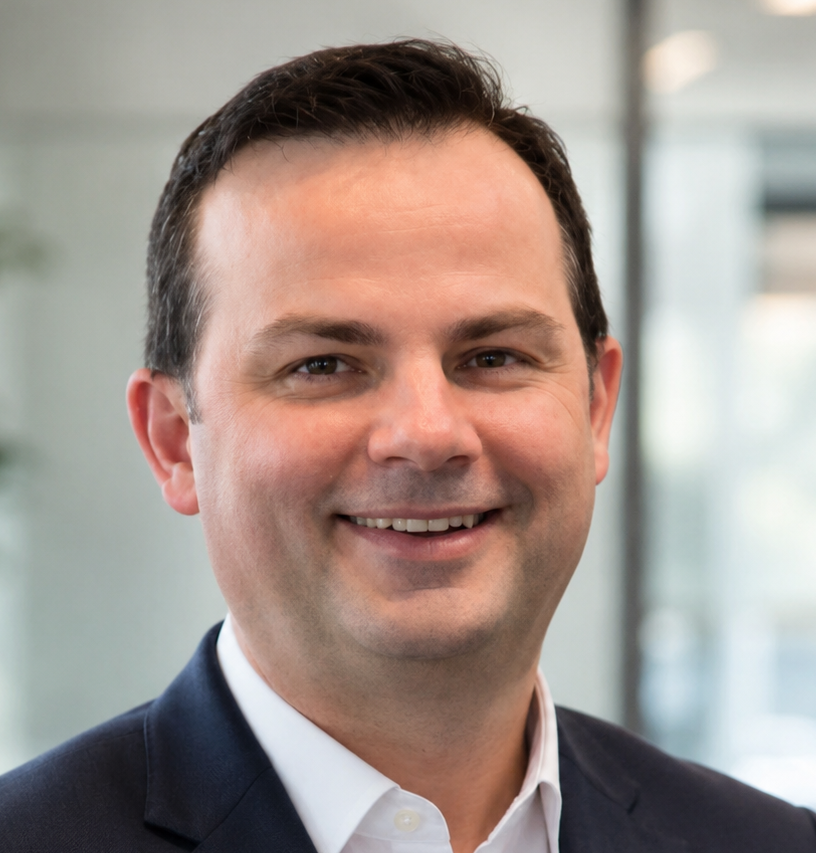
Bogdan — Executive Committee member

Delivery oversight, architecture, and cost accountability, supporting the team doing the work.

Backend

Connect the data and power the platform.

Frontend

Turn complex information into usable views.

Project management

Coordinate priorities, partners, and delivery.

Quality assurance

Test workflows and catch issues before handover.

Graphic design

Make the dashboard clear and easy to navigate.

Help different teams work together

19 partners brought national health, first response, research, and technology expertise into one shared operational picture.

Keep delivery moving under pressure

We adapted delivery around experts busy with COVID-19 response, using reusable components and fewer dependencies to protect progress and budget.

Connect once. Reuse across countries.

Maps, indicators, reports, and simulation views in one workspace, built with reusable components to reduce effort and support different national needs.

From our project partners

I highly recommend Bogdan and his team. For 3 years on a Horizon 2020 project (European Commission project with €11M budget), they delivered to an incredibly high standard − professional, flexible, pragmatic and highly user−focused. The company's strong reputation is a direct reflection of Bogdan's leadership.

Jessica HayesProgramme Manager, Global Health at University of Galway3-year engagement

What could this look like for your business?

Bring your systems into one working view

Connect your tools, reduce manual work, and give your team more time to act. We handle discovery, integration, and delivery for your automation or digital transformation.

Meet the PANDEM-2 partners
Talk about your transformation Start with your systems and goals.

Save time with one shared view

PANDEM-2 is a European Commission funded R&D initiative under Horizon 2020, focused on strengthening EU-wide pandemic preparedness and response through new concepts, training, and interoperable IT systems.

The goal was practical: bring 10+ data sources across the EU into a unified dashboard that national health institutes and first responders could use together. Instead of repeatedly gathering information from separate systems, users could work from a shared view, with less manual preparation and less time spent switching between sources.

The platform was designed for use by countries across the EU, with configurable views for different national needs. Simulation was a core part of preparedness: bringing model outputs into the dashboard helped teams explore scenarios and use a shared workspace for training exercises, alongside real-world information.

The same challenge behind business digital transformation and automation
Disconnected systems, manual information gathering, and teams with different workflows. Our work connected the data and shaped a usable shared workspace around the people doing the job. That is also the foundation we establish when helping businesses prepare for AI automation.

Track what matters

The dashboard’s indicators help turn connected data into measures people can use. For a business, the equivalent is a shared view of key performance indicators (KPIs): order turnaround time, cost per transaction, capacity utilisation, or service levels. The measures differ, but the goal is the same: make relevant information easier to monitor and discuss.

Connect the data. Track the indicators. Explore the impact.
In a business transformation or AI automation project, agreed KPIs define what improvement means. Simulation can then help explore how a proposed change might affect those measures, while results after implementation show whether the expected improvement occurred. For example, a team could assess a workflow change against turnaround time and cost per order, while also tracking error rates.

Watch the PANDEM-2 Indicators demo →

Explore scenarios before acting

Connecting data helps users understand the current picture. Simulation adds a forward-looking dimension: what if conditions change, and how could we respond? Bringing simulation outputs into the same dashboard makes them part of the planning conversation for health institutes, researchers, and first responders across countries.

Why this matters for AI and business transformation
For an AI initiative, the design question extends beyond generating an answer: how will people explore alternatives and assess a proposed action before using it? Simulation provides a way to structure that exploration. The transferable lesson from PANDEM-2 is to bring data, model outputs, and human review into one workflow, with scenario results understood in the context of their assumptions.

In a business setting, the same approach could support what-if exercises around demand, capacity, or resource allocation before changing a process. This is the connection to our AI automation work: designing decision support around the people who need to evaluate and act on the results.

Watch the PANDEM-2 Simulation Models demo →

Build around real user needs

Users did not start with clear, complete requirements. National health institutes, first responders, and research partners each brought different priorities. Through workshops and multiple iterations, we discovered what they needed to see, how they worked with information, and where a shared dashboard could save them time. Feedback on successive versions helped turn broad needs into practical requirements.

Discovery continued throughout delivery: workshops informed the next version, users reviewed it, and we refined the dashboard together. This kept the work grounded in real operational needs across institutions and countries.

In multi-country public health programmes, complexity compounds quickly: heterogeneous data, differing operational models, and multiple stakeholder agendas. The delivery challenge is not just building software — it is building a coherent operating layer that institutions can trust.

Help different teams work together

19 partners across Europe
PANDEM-2 brought together public health bodies, research institutes, emergency response organisations, and technology partners.
Robert Koch Institute (RKI)

Germany’s central public health institute and a key pandemic management stakeholder.

RIVM

National Institute for Public Health and the Environment (Netherlands).

THL

Finnish Institute for Health and Welfare (Finland).

Fraunhofer INT

Applied research partner supporting capability planning, evaluation, and communication workstreams.

Additional partners included: University of Galway (NUI Galway) (project lead), Austrian Red Cross, Italian Red Cross, Public Health Agency of Sweden, Universite Catholique de Louvain (UCLouvain/CTMA), Radboudumc, Trilateral Research, Epiconcept, Pintail, and others listed on the official partners page.

Keep delivery moving under pressure

Post-agreement reality: Shortly after the grant agreement was signed, core public health stakeholders were fully engaged in live COVID-19 response operations.

Although PANDEM-2 was funded to strengthen pandemic preparedness, the programme ramp-up coincided with ongoing emergency waves across Europe. Key institutions within the consortium were actively managing:

This created an immediate execution constraint:

Strategic Response: Rather than expanding scope or increasing burn rate, we adapted the delivery model − front-loading architecture stabilization, preparing reusable components, and reducing dependency chains until stakeholder bandwidth normalized.

The programme therefore operated under a real-world constraint not present at proposal time. Despite this, delivery remained controlled, structured, and financially disciplined.

The ability to maintain execution quality under these conditions directly contributed to completing the scope under EUR 800K of the EUR 1.1M allocation.

Connect once. Reuse across countries.

A unified dashboard connecting data from 10+ sources, with maps, indicators, graphs, reports, and simulation views in one workspace. The aim was to reduce the effort of assembling a useful operational picture and make the same platform usable across countries and partner types.

Reuse-first delivery model
We accelerated delivery by leveraging pre-built components and frameworks, while building a small set of generic, reusable modules that could be applied beyond PANDEM-2.
Pre-built Foundations

Used existing frameworks and proven building blocks instead of reinventing platform primitives.

New Generic Components

Built modular components intended for reuse across future R&D and production rollouts.

Integration-Ready

Designed interfaces to operate in a multi-partner ecosystem with differing data and workflows.

Governance-Compatible

Delivery practices aligned with consortium reporting, review cycles, and EC funding requirements.

More value. Less rework.

We combined user discovery, data integration, and disciplined delivery to make a complex transformation practical for the people using it, while protecting the programme budget.


25+ Years Delivering Automation • 20+ Industries • Startup to Fortune 100

European Commission
WHO
Cisco
Disneyland
PetHealth
VIP Auto Parts and Tires
PushModels
Unotifi
“Instrumental in delivering a major global public health project” World Health Organization, Sr. Technical Officer, AI and Frontier Technologies (Geneva, Switzerland)
Get Free CTO Review
No sales process • 30 min • Direct with CTO

Free CTO Operational Review

Digital transformation, Automation and AI, without management burden.

You stay focused on running the business. We handle discovery, architecture, execution, and delivery.

Simple process. Measurable outcomes.

1
Initial Review

CTO reviews your business and current challenges.

2
20-Minute Discussion

We quickly understand operations, systems and priorities.

3
Opportunity Assessment

Identify the highest-return automation and AI opportunities.

4
Practical Roadmap

Clear recommendations, expected savings and next steps.

Bogdan Bucura, Fractional CTO
Reviewed directly by Bogdan Bucura

Fractional CTO • 25+ years

LinkedIn
Confidential discussion 🇪🇺 +34 656 664 618 🇺🇸 +1 (207) 450-2975
No obligation. Takes 20 minutes. You’ll get clear next steps.